
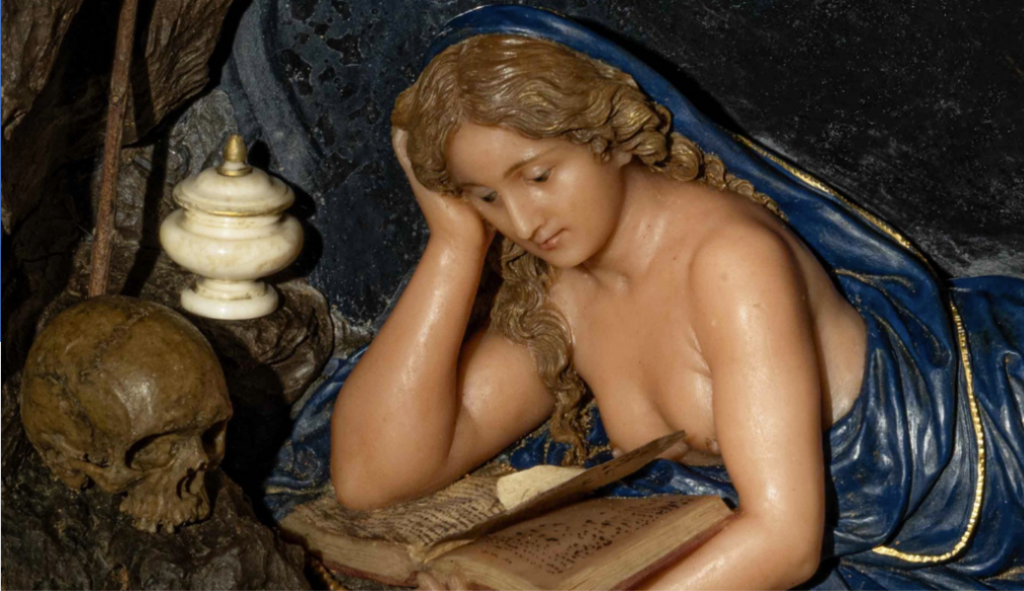
The art of sculpting wax is on display in Florence. The exhibition “Cera una volta. The Medici and the Arts of Wax Modelling” takes place in the new exhibition spaces on the ground floor of the Uffizi Gallery, from 18 December 2025 to 12 April 2026. It brings together more than ninety works—including paintings, sculptures, cameos, and objects in hardstone—revealing a chapter of Renaissance and Baroque creativity that has remained little known until now. Many of these masterpieces return to Florence after centuries away from the city.
Curated by Valentina Conticelli, Andrea Daninos, and Simone Verde, this is the first exhibition dedicated to Florentine collections of wax modelling from the 16th and 17th centuries. Its aim is to highlight an often-overlooked art form that has accompanied the history of sculpture since antiquity and reached extraordinary refinement in Florence under Medici patronage.
Wax—an organic, malleable material produced by bees—made it possible to reproduce the texture of skin like no other technique, giving rise to faces and bodies in works that combine technical perfection with artistic expressiveness. With the Baroque period, fascinated by the ephemeral, this material became a means of exploring beauty and the transience of the human body. Much of this heritage has unfortunately been lost, both because of the fragility of the material and due to critical prejudice that historically excluded wax modelling from the so-called “major arts.”
The exhibition also highlights the role of the Medici as farsighted collectors, capable of recognizing the artistic value of wax works and supporting their creators. This scenario lasted until 1783, when a major auction promoted by Grand Duke Pietro Leopoldo of Lorraine dispersed almost the entire collection.
Scientific and Historical Discoveries
Beyond celebrating the beauty of the works, the exhibition offers a critical reassessment of the history of wax modelling. Some scholars, such as Aby Warburg and Julius Schlosser, had hypothesized that Renaissance portraits and busts derived from wax casts of the deceased, imbued with mystical and religious meanings.
The exhibition’s curatorial research, however, drawing on historical sources, demonstrates that this link to ancient practices was in fact a propagandistic narrative constructed by Vasari, who sought to present Florentine sculpture as the direct heir of Roman art. Renaissance techniques relied on clay rather than wax: wax sculpture only became established at the beginning of the 15th century, with the development of bronze casting and the introduction of the lost-wax technique (cera persa) by Lorenzo Ghiberti. The exhibition reconstructs these origins with precision, moving beyond magical or esoteric interpretations and restoring wax modelling to its rightful place in the history of European sculpture.
Highlights and New Acquisitions
Among the approximately 90 works on display, many return after centuries outside Florentine collections, including:
- Screaming Soul in Hell, attributed to Giulio de’ Grazia;
- The funerary mask of Lorenzo the Magnificent, by Orsino Benintendi;
- An entire room dedicated to Gaetano Giulio Zumbo, the foremost Florentine wax modeller of the late 17th century, featuring the recent acquisition by the Galleries, The Corruption of Bodies, which preserves the vivid memory of his unique oeuvre.
The exhibition route, conceived as a labyrinth, invites visitors on a true journey through time and technique, reflecting not only on the history of wax modelling but also on how art criticism has constructed—and dismantled—myths over the centuries.
The exhibition thus offers a unique opportunity to immerse oneself in a delicate and fascinating artistic world, rediscovering the cultural richness of Florence and the visionary outlook of the Medici.