
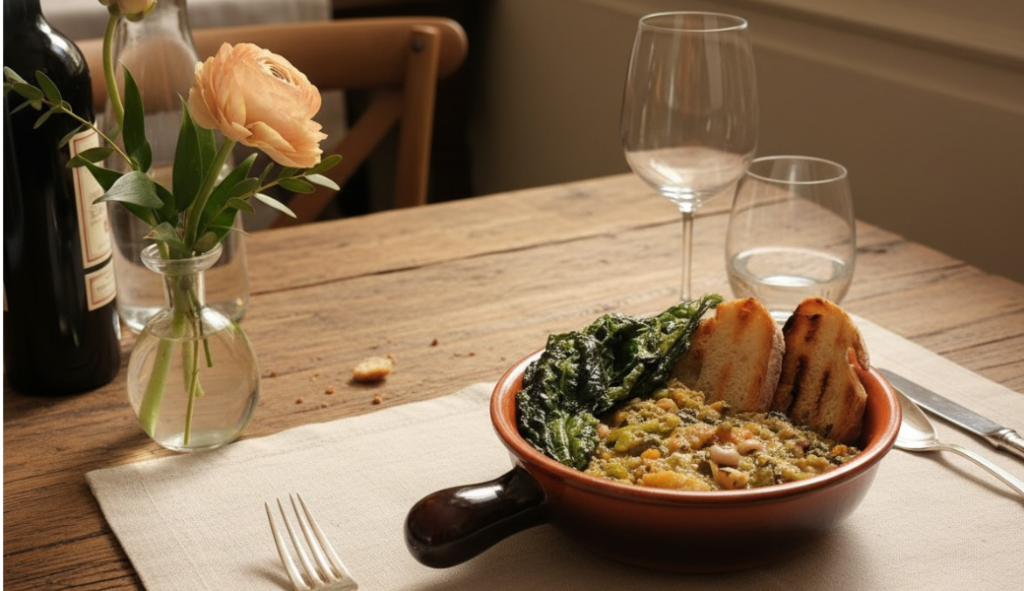
Some dishes are born out of necessity and become symbols. Ribollita and peposo are perfect examples of the most authentic Tuscan cuisine: humble yet profound recipes, created to warm both body and soul during the coldest months of the year.
Ribollita has its roots in rural tradition. Made with seasonal vegetables, stale bread, and time — the most essential ingredient — it was the dish of families who knew how to turn simplicity into richness. Its name already tells the story: a soup that is “re-boiled” the following day, when flavors fully meld and become even more intense. It is Tuscan winter in a bowl, shaped by slow gestures and the comforting aromas of home.
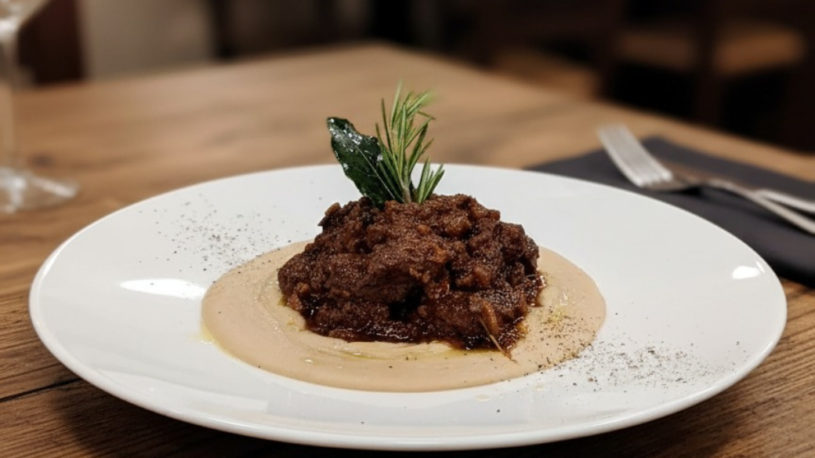
Peposo, on the other hand, was born in the kilns of Impruneta, where brickmakers slowly cooked meat in clay ovens, flavoring it generously with black pepper and red wine. A bold, essential dish that speaks of strength, patience, and conviviality. Here too, time is the true protagonist: long cooking transforms just a few ingredients into something extraordinary.
Together, these dishes tell the story of winter in Tuscany — a land that invites you to slow down, to sit at the table, and to share. For this reason, they are the perfect choice to enjoy in our Bar & Bistrot, where tradition meets a warm and refined atmosphere, ideal for a comforting lunch break or an authentic dinner experience.
And for those who wish to bring a taste of Tuscany home, we have decided to share the recipes for ribollita and peposo as prepared by our chef, Carlos Curasma. An invitation to recreate these great classics in your own kitchen, following the gestures, timing, and flavors of tradition.
Enjoy the read — and buon appetito.
PEPOSO FROM IMPRUNETA
Authentic Ingredients
For 4 people, you will need:
- 800 g – 1 kg beef shank (or chuck): a cut rich in connective tissue that melts during cooking
- 1 bottle of Chianti (or another full-bodied Tuscan red wine)
- 20–30 whole black peppercorns (essential for aroma)
- 1 tablespoon freshly ground black pepper
- 4–5 garlic cloves (unpeeled or lightly crushed)
- Salt, to taste
- A few sage leaves and a sprig of rosemary (optional but traditional)
- Unsalted Tuscan bread, toasted, to serve
Method
- Preparing the meat
Cut the beef into fairly large cubes (about 3–4 cm). Do not remove fat or sinews — they are what make the meat incredibly tender. - Assembling the dish
Place the meat in a clay pot (ideal) or a heavy-bottomed saucepan. Add the garlic, whole peppercorns, ground pepper, and salt. - Covering with wine
Pour in the red wine until the meat is completely submerged. - Slow cooking
Cover the pot. If using a clay pot, you may seal the lid with a simple flour-and-water dough, as was done in the past.
- On the stovetop: cook over very low heat for at least 3–4 hours.
- In the oven: cook at 140–150°C (285–300°F) for about 4 hours.
- Final result
Peposo is ready when the meat falls apart at the touch of a fork and the wine has reduced into a thick, dark, glossy sauce.
Chef’s Tips
- No rush: if the sauce is still too liquid, remove the lid for the last 30 minutes to allow it to thicken.
- Perfect sides: peposo pairs beautifully with cannellini beans drizzled with olive oil or soft polenta.
- Resting time: like all stews, it tastes even better the next day.
Historical note: the original recipe did not include tomatoes (which arrived in Europe later). If you prefer a modern version, you may add a tablespoon of tomato paste — but Tuscan purists might raise an eyebrow!
TUSCAN RIBOLLITA
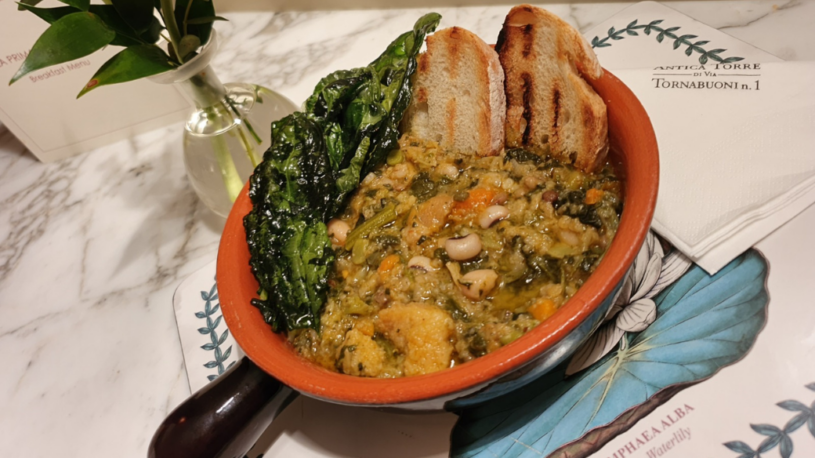
Ribollita is the symbol of Tuscan cucina povera: a bread-and-vegetable soup that, as its name suggests, must be “boiled again” to reach its characteristic texture and flavor.
Here is the traditional recipe to prepare it at home.
Key Ingredients
For 4–6 people:
- Leafy greens: 1 bunch cavolo nero (essential!), ½ Savoy cabbage, 1 bunch Swiss chard
- Beans: 400 g dried cannellini beans (soaked for 12 hours)
- Soffritto: 1 large onion, 2 carrots, 2 celery stalks, 1–2 garlic cloves
- Other ingredients:
2 medium potatoes
300 g stale unsalted Tuscan bread
1 tablespoon tomato paste (or 3–4 peeled tomatoes)
Extra virgin olive oil, salt, pepper, and a sprig of thyme
Step-by-Step Preparation
- The bean base
Boil the cannellini beans in plenty of water with a sprig of sage or rosemary. Once cooked:
- Blend about half of the beans with some of their cooking water until creamy.
- Keep the other half whole.
Do not discard the cooking water — it will be used for the soup.
- Soffritto and vegetables
In a large pot (preferably clay), heat the olive oil and gently sauté the chopped onion, celery, and carrot. Add the diced potatoes and, after a few minutes, the diluted tomato paste. Add the leafy greens (cabbage, chard, and cavolo nero), roughly chopped.
- Slow cooking
Pour the bean cream and reserved cooking water over the vegetables. Cover and cook over low heat for about 1½ hours. Halfway through cooking, add the whole beans. Season with salt and pepper.
- Assembling (bread soup)
In a soup tureen or clean pot, alternate layers of stale bread slices with ladles of hot soup. Let rest for several hours — ideally overnight — until the bread fully absorbs the liquid.
- The “ribollita” ritual
The next day, place everything in a pot with a drizzle of olive oil and “re-boil” over low heat for 15–20 minutes, until thick, dense, and almost creamy.
Comments
Wonderful! Grazie mille…